Sea Chest & Niche Area Cleaning
The flat hull gets the attention. The niche areas and sea chests get the worst of the fouling, and the closest scrutiny from port biosecurity. We clean the spots most cleans miss, in the water.

What are niche areas and sea chests?
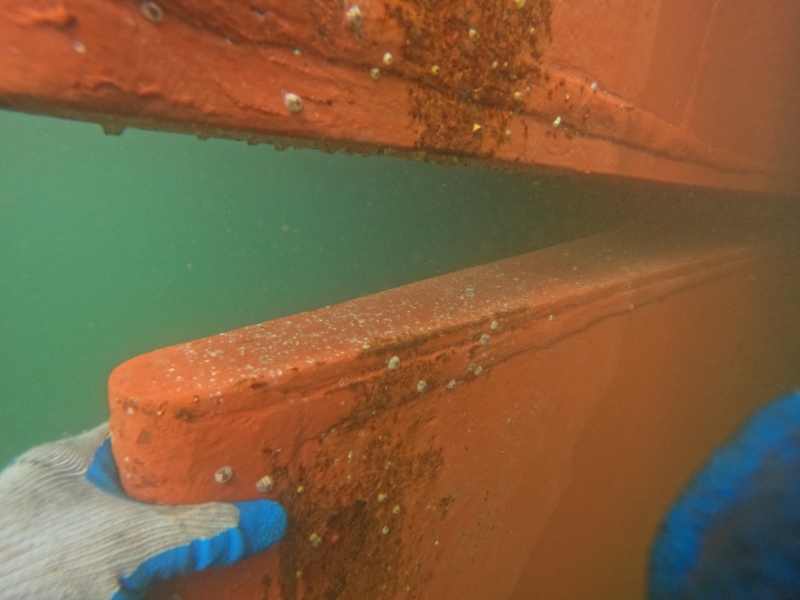
Niche areas are the recessed and irregular parts of a hull, such as sea chests, gratings, bow thrusters, rudder gaps and inlet openings. Sea chests are the recessed intakes that draw seawater into the vessel. Because water sits still in these spots, they foul faster and harder than the flat hull, which makes them a biofouling and invasive-species hotspot.
The fouling you cannot see is the fouling that gets you flagged
A flat hull is easy to clean and easy to inspect. Niche areas are neither. Water pools in the recesses, growth takes hold, and the fouling sits out of sight until it becomes a problem. Blocked sea-chest gratings choke the seawater intake your systems depend on. Heavy growth in the niches drags on efficiency the same way hull fouling does.
There is a bigger risk on top of that. Niche areas are where invasive species hitch a ride between ports, so they are exactly what port and biosecurity authorities look at hardest. Leaving them dirty is not just a performance problem, it is a compliance one.
How we clean
Inspection
We locate and assess the niche areas and sea chests, confirm the fouling level, and identify the spots that need the most work.
Closed-Loop Cleaning
Divers remove growth from recesses, gratings and intakes, using a closed-loop capture method so the growth goes into capture rather than back into the water.
Filtration & Discharge
Captured water is filtered before it returns to the sea, helping keep biofouling and invasive species out of the local marine environment.
Reporting
You get a record of the condition and the work done for your fleet files and any class or port requirement.
What we clean
Sea Chests
The recessed seawater intakes, cleaned without pulling the vessel.
Gratings and Grids
Cleared so intake flow is not choked by growth.
Bow Thruster Tunnels
A classic fouling and biosecurity hotspot.
Rudder Gaps and Running Gear Recesses
The awkward spots a flat clean skips.
Inlet and Discharge Openings
Kept clear and compliant.
Sea chest and niche area questions, answered
What is a sea chest on a ship?
Why do niche areas foul faster than the hull?
Can sea chests be cleaned in the water?
Why do niche areas matter for biosecurity?
We clean niche areas and sea chests on commercial vessels at anchorage and alongside across South African waters, usually as part of a wider hull service. Each job is planned around the vessel's schedule and turned around with as little disruption as possible. Backed by over 30 years of marine civil experience and run on site by CEO Rob Bower and GM Andre Schoeman.