In-Water Hull Cleaning in South Africa
Octodive (Pty) Ltd offers a full suite of underwater and commercial diving services, supporting the shipping industry with safe, efficient, and compliant in-water operations.

What is in-water hull cleaning?
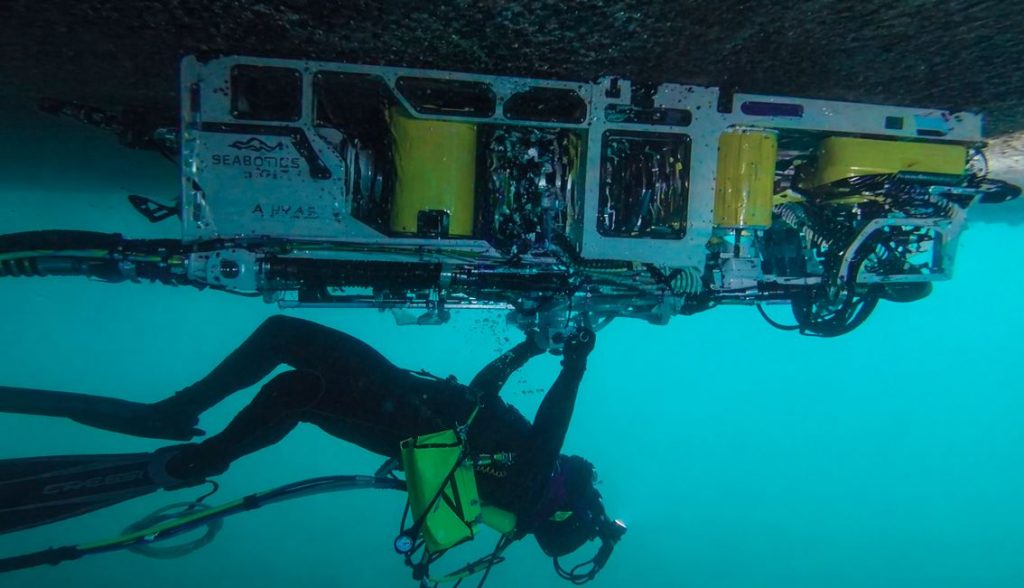
In-water hull cleaning is the removal of biofouling, the algae, barnacles and weed that build up on a ship’s hull, while the vessel stays afloat instead of going into dry-dock. Divers remove the growth using cleaning heads. Octodive uses a closed-loop method that captures and filters the debris, protecting the marine environment and the vessel’s anti-fouling coating.
A fouled hull is the most expensive thing on your fuel bill
Growth on a hull is not cosmetic. It creates drag. Drag forces the engine to burn more fuel to push the same vessel through the water, and that cost runs every hour the ship is at sea. Heavy fouling can push fuel use up sharply, and even a thin layer of slime shows up at the pump.
There is a second cost most operators feel harder: time. Pulling a vessel for dry-docking means a booking, a queue, and days out of service. In-water cleaning removes the growth without removing the ship from the water. We work alongside or at anchorage, and most routine cleans are turned around quickly.
How we clean
Assessment
We inspect the hull and confirm the fouling level, coating type, and the areas that need attention, from the flat bottom to niche areas and sea chests.
Closed-Loop Cleaning
Divers clean using non-abrasive heads connected to a closed-loop capture system. Growth is removed directly into capture instead of being released back into the water, while protecting the anti-fouling coating.
Filtration & Discharge
Captured water is filtered before discharge back into the sea, helping meet discharge standards and preventing biofouling and invasive species from entering the local marine environment.
Reporting
A full record of the completed work is provided for your fleet files and class society documentation.
What we clean
Flat Bottom and Sides
The main fouling surface and often the biggest drag saver.
Niche Areas and Sea Chests
Biofouling hotspots and key biosecurity risk areas. View niche area and sea chest cleaning
Rudders and Running Gear
Kept clear to help protect handling and operational efficiency.
Hull Cleaning FAQs
What is hull cleaning?
How does hull cleaning reduce fuel costs?
Can you clean a hull without dry-docking?
Does cleaning damage the anti-fouling coating?
Where does the removed growth go?
We have cleaned commercial vessels at anchorage and alongside across South African waters, from routine maintenance cleans to fuel-recovery jobs ahead of a voyage. Each operation is planned around the vessel's schedule and turned around with as little disruption as possible. Backed by over 30 years of marine civil experience and run on site by CEO Rob Bower and GM Andre Schoeman.