Underwater Blanking for Valve Change & Repair
A valve that needs changing usually means a dry-dock. Not always. We blank off the opening underwater so the work can be done with the vessel still in the water, no yard slot, no days lost.

What is underwater blanking?
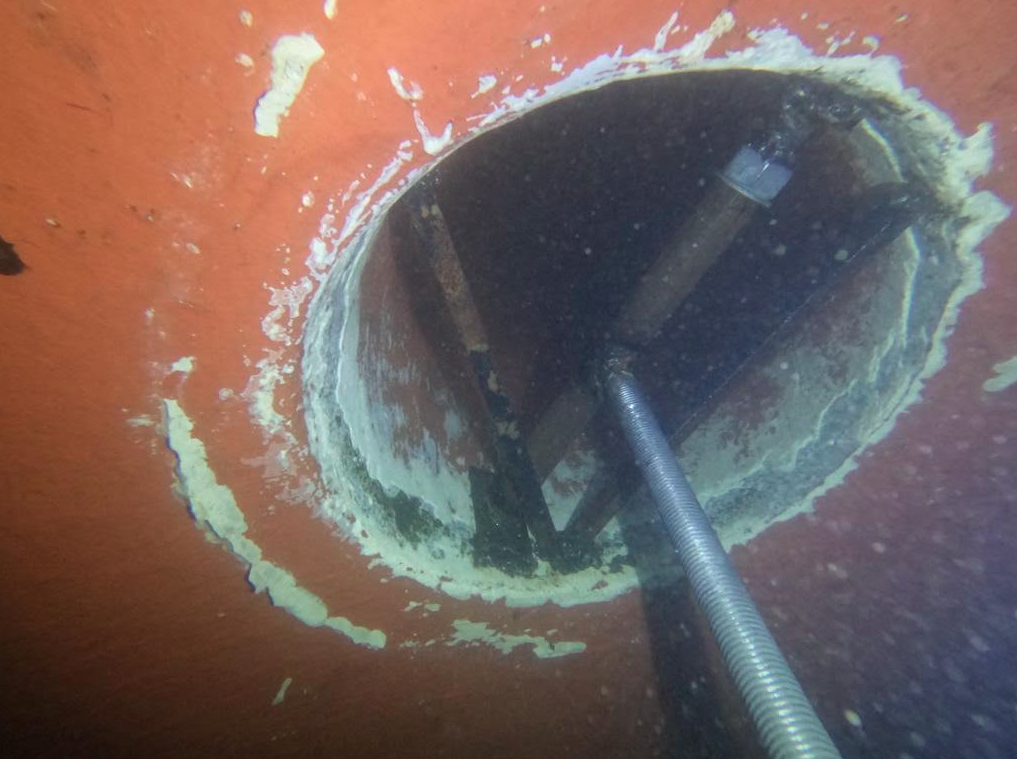
Underwater blanking is the sealing of a hull opening, such as a sea chest or overboard discharge, with a blanking plate fitted by divers from outside the hull. With the opening sealed, the connected valve or pipework can be drained and worked on from inside while the vessel stays afloat. It allows valve changes and repairs without dry-docking.
Why blanking matters
Change a valve without booking a dry-dock
A valve on a hull opening cannot normally be changed with the vessel in the water. Open it up and the sea comes in. The usual answer is a dry-dock, which means a yard booking and days out of service for what may be a single valve.
Blanking solves that. Divers fit a sealing plate over the opening from outside the hull, which holds back the water. With the opening blanked, the crew or engineers can drain the line and change or repair the valve from inside, safely and dry, while the vessel stays afloat. When the work is done, the blank comes off. One dive instead of one dry-dock.
How an Octodive blanking job works
Assess and Plan
We confirm the opening, the valve or pipework behind it, and how the work inside will be coordinated, then plan the dive around safety and the vessel’s schedule.
Fit the Blank
Divers fit the blanking plate over the opening from outside the hull, sealing it so the water is held back and the line can be drained.
Internal Work Proceeds
With the opening blanked, the valve change or repair is carried out from inside, dry and safe, while the vessel stays in the water.
Remove and Confirm
Once the internal work is complete and confirmed, divers remove the blank and check the opening, ready for the vessel to return to normal operation.
What we blank
Sea Chest Openings
Sealed so the connected valves can be worked on.
Overboard Discharges
Blanked for valve change or pipework repair.
Inlet and Outlet Openings
Sealed to allow internal work below the waterline.
Valve Changes
The opening held while the valve is replaced from inside.
Pipework Repairs
Internal repairs that need the sea held back first.
Blanking questions, answered
What is blanking on a ship?
Can a valve be changed without dry-docking?
How does the blanking plate hold back the water?
Is blanking safe to do in the water?
We carry out blanking for valve changes and repairs on commercial vessels across South African waters, sealing hull openings so the work can be done in the water rather than in dry-dock. Each job is planned around the vessel's schedule and run to strict safety standards. Backed by over 30 years of marine civil experience and run on site by CEO Rob Bower and GM Andre Schoeman.