Mooring Inspection
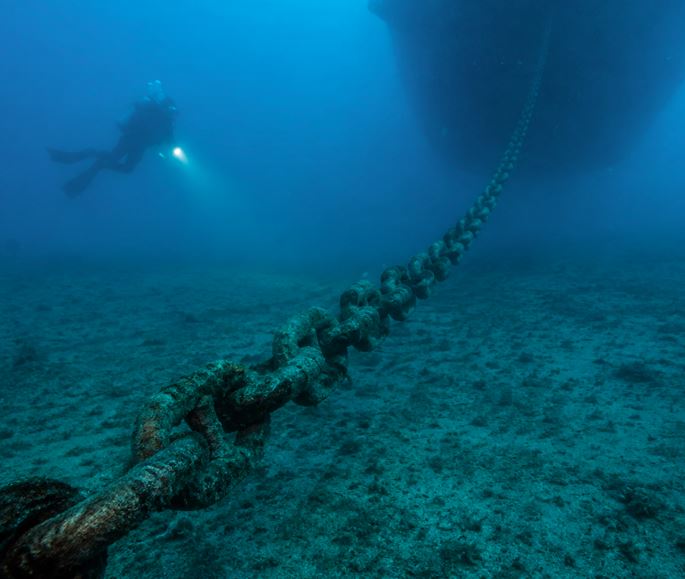
Moorings fail out of sight, on the parts no one can see from the deck. We inspect the chains, anchors and fittings below the waterline and tell you what condition they are really in.

What is a mooring inspection?
A mooring inspection is an underwater check of the parts that hold a vessel or structure in place, including chains, anchors, shackles and connecting fittings. Divers assess wear, corrosion and damage on the components below the waterline, where most mooring failures start. The inspection produces a documented condition record so problems are caught before a mooring lets go.
Why moorings need inspecting
A mooring fails where you cannot see it
The part of a mooring you can see from the deck is rarely the part that fails. Wear, corrosion and fatigue build up on the chain, the shackles and the ground tackle below the waterline, out of sight, until a link or a connection gives way. By then it is an incident, not a maintenance item.
An underwater inspection catches it earlier. Divers go down and assess the actual condition of the chains, anchors and fittings, not what they should be after so many years, but what they are now. You get a documented record you can act on, and a clear picture of what is safe to keep using and what needs replacing.
How an Octodive mooring inspection works
Scope
We confirm the mooring layout, what needs inspecting, and the reason behind it, whether that is routine maintenance, a concern, or a scheduled check.
Underwater Assessment
Divers inspect the chains, anchors, shackles and fittings below the waterline, recording the condition of each as they go.
Documentation
Findings are captured with visual records, so you have evidence of condition rather than an assumption based on age.
Report
You receive a condition report that flags wear, corrosion and damage, with a clear basis for deciding what to keep, what to watch, and what to replace.
What a mooring inspection covers
Chains
Wear, elongation, corrosion and damage along the length.
Anchors and Ground Tackle
Condition and holding integrity below the waterline.
Shackles and Connecting Fittings
The join points where failures often start.
Buoys and Surface Connections
Where moorings include them.
Visual Documentation
Recorded evidence of condition for your files.
Mooring inspection questions, answered
What does a mooring inspection check?
How often should moorings be inspected?
Why inspect a mooring underwater?
Do you provide a report?
We inspect moorings and ground tackle across South African waters, assessing the condition of chains, anchors and fittings below the waterline and documenting what we find. Each inspection is planned around the operation and turned around with as little disruption as possible. Backed by over 30 years of marine civil experience and run on site by CEO Rob Bower and GM Andre Schoeman.